

Brazil Shipping Customs: What you will really have to pay in 2026
Since the "Remessa Conforme" program, the following applies to shipments to Brazil: No import duty is levied on goods valued up to US$50; a flat rate applies to goods valued at US$50,01 and above. 60% Plus ICMS. Usually, the recipient in Brazil pays the duties; however, if DDP shipping is chosen, the sender can cover these costs in advance. The sender should have the DIR and Siscomex Remessa forms, as well as the recipient's CPF or CNPJ number, ready.
In short:
- No import duties are levied on shipments up to US$50; however, ICMS fees may apply, which are usually paid by the recipient.
- For amounts between US$50,01 and US$3.000, the customs duty is 60 percent less US$30, plus the ICMS assessment.
- Customs clearance is handled through the Siscomex Remessa system, whereby the recipient must pay the duties within approximately 20 days on the website of the Brazilian courier services.
- For prohibited or restricted goods such as drugs, fresh food and live animals, special permits are necessary, otherwise confiscation or return is threatened.
- Shipping via courier services is usually faster and more expensive, while postal shipping is cheaper but involves longer, less transparent processing times.
Table of Contents
- How are import duties and ICMS composed?
- How does customs clearance work via Siscomex Remessa?
- Which goods are prohibited or require a permit?
- Which shipping method best suits the delivery time and budget?
- How to prepare a shipment to Brazil
- How to simplify international parcel shipping and customs to Brazil
- Sources
- FAQ
How are import duties and ICMS composed?
Since May 2026, import duties to Brazil have been calculated according to a clear tiered system. Under the "Remessa Conforme" program, shipments up to US$50 are subject to a zero percent import duty rate. For goods valued between US$50,01 and US$3.000, the rate is 60%, with the program allowing for a US$30 deduction from the calculated duty amount.
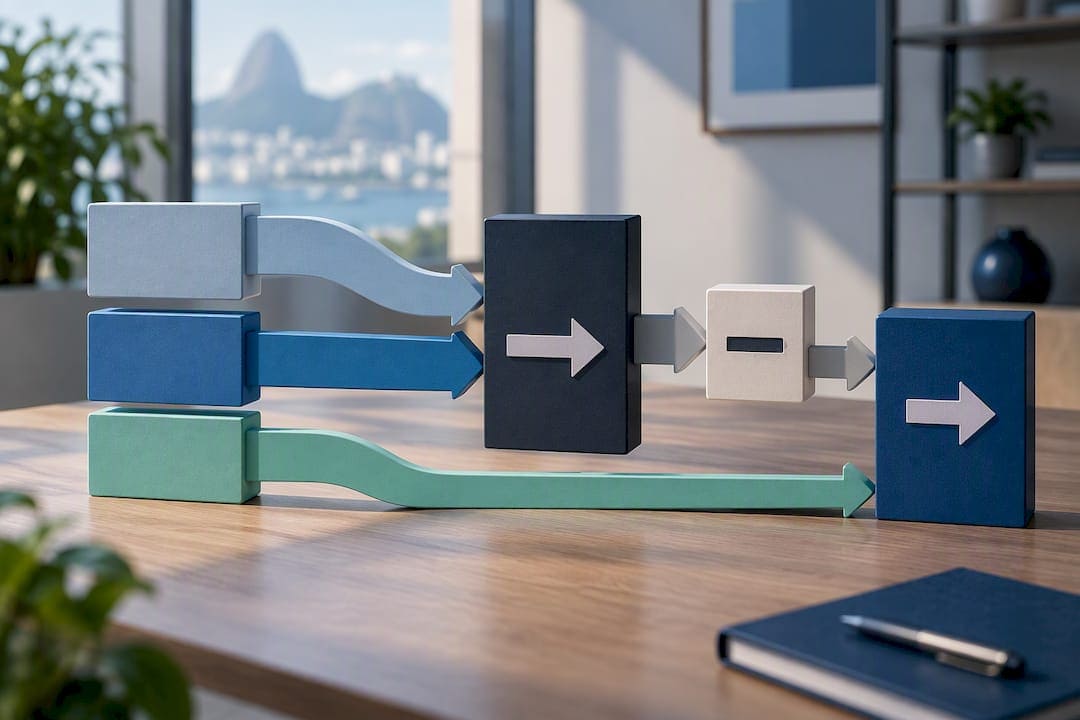
It is calculated not only on the value of the goods, but on the sum of the value of the goods, freight costs and customs duties already charged.
A calculation example illustrates this: For a shipment worth US$100 plus US$20 shipping, the basis for customs duty is US$120. Customs duty is 60% of this, minus the US$30 from the program. The ICMS (International Commodity Management Service) is then added to the total of the goods value, shipping, and customs duty. In the end, the recipient often pays significantly more than the value of the goods alone would suggest.
- Up to $50: No import duty, but ICMS may still apply.
- From $50,01 to $3.000: 60% customs duty with a $30 deduction, plus ICMS.
- Additional costs: Courier services often charge their own customs processing fees.
Important: According to the Federal Customs Administration (Receita Federal), these rates apply to shipments under the simplified procedure, not to regular commercial imports with their own customs tariff. The choice of Incoterm also determines who bears this amount: with DAP, the recipient pays, while with DDP, the sender already includes the duties in the shipping price.
How does customs clearance work via Siscomex Remessa?
Every shipment to Brazil is declared via the Siscomex Remessa system. This declaration, the DIR, is not created by the sender in Germany, but is registered in the Brazilian system by Correios or the contracted courier company. The recipient must be identifiable by their CPF number (for individuals) or CNPJ number (for businesses).
Once the duties have been calculated, the recipient has approximately 20 days, according to the Receita Federal, to pay via the Correios website or the website of the respective courier. The agency does not send direct payment requests by mail or email, so recipients must track their shipments themselves.
- Sender creates commercial invoice with product description, value and recipient details.
- Correios or courier registers the DIR in the Siscomex Remessa.
- The recipient receives notification and pays within the deadline.
- Once payment has been received, the shipment will be released for delivery.
Pro tip: Commercial invoices in Portuguese or English significantly speed up processing, as customs officials often have to manually check goods descriptions in German.
For commercial imports, the simplified DIR is not sufficient. In this case, the Brazilian importer needs a separate one. SISCOMEX access as well as, where applicable, an import license and a regular declaration procedure such as DUIMP, DI or DSI.
Which goods are prohibited or require a permit?
Certain categories of goods may not be shipped to Brazil at all, or only with prior authorization. Anyone who overlooks this risks confiscation, fines, or having to pay for return shipping.
- Strictly forbidden: Drugs, fresh food, e-cigarettes including accessories and liquids, as well as unauthorized tobacco products.
- Subject to approval: Pharmaceutical products, live plants and animals, antiques, and products from endangered species, which often require inspection by IBAMA or ANVISA.
- Practice: The Nomenklatura Comum do Mercosul, or NCM for short, should be checked before shipping in order to identify any approval requirements early on.
According to the Receita Federal, shipments containing prohibited items are regularly confiscated, regardless of the declared value of the goods.
Which shipping method best suits the delivery time and budget?
The choice between postal shipping via Correios and a courier service like DHL or UPS affects both delivery time and customs clearance. Courier services usually handle customs formalities themselves and deliver faster, but often charge their own processing fee. Postal shipments are cheaper, but customs clearance often takes longer and is less transparent and easier to track.
Besides the shipping method, other factors determine the final price:
- Weight and volumetric weight: For bulky, lightweight packages, the volumetric weight is usually calculated.
- Insurance: This is advisable for higher-value shipments, as customs delays can increase the risk of loss.
- Pick-up versus drop-off service: A collection service usually costs more than dropping off the item at a collection point.
For time-critical or high-value shipments, the combination of express shipping, DDP terms and insurance is often worthwhile, so that customs clearance does not become the biggest uncertainty in the entire shipping process.
How to prepare a shipment to Brazil
Structured preparation significantly reduces the risk of customs problems and ultimately saves time during delivery.
- Determine the value of the goods, find the appropriate NCM number, and clarify with the recipient in Brazil whether an import license is required.
- Complete the commercial invoice in full with a description of the goods, their value, dimensions, and the recipient's CPF or CNPJ number, along with the appropriate customs form. CN23 or CN22 enclose.
- Select the Incoterm and service level, take out insurance if necessary, and book the shipment.
- Keep an eye on shipment tracking and inform the recipient about possible customs payments in good time.
Pro tip: Sturdy packaging with correct customs marking prevents shipments from being opened and damaged during random inspections; appropriate packing material It should fit snugly without covering the customs labels.
Those who regularly send packages will find further practical tips on Packaging and service levels as well as one Overview of customs clearance to Brazil.
How to simplify international parcel shipping and customs to Brazil
For companies that regularly ship to Brazil, each of the above requirements means additional administrative work. Paket International consolidates shipping costs and customs calculations, document creation, and shipment tracking on a single, central platform.
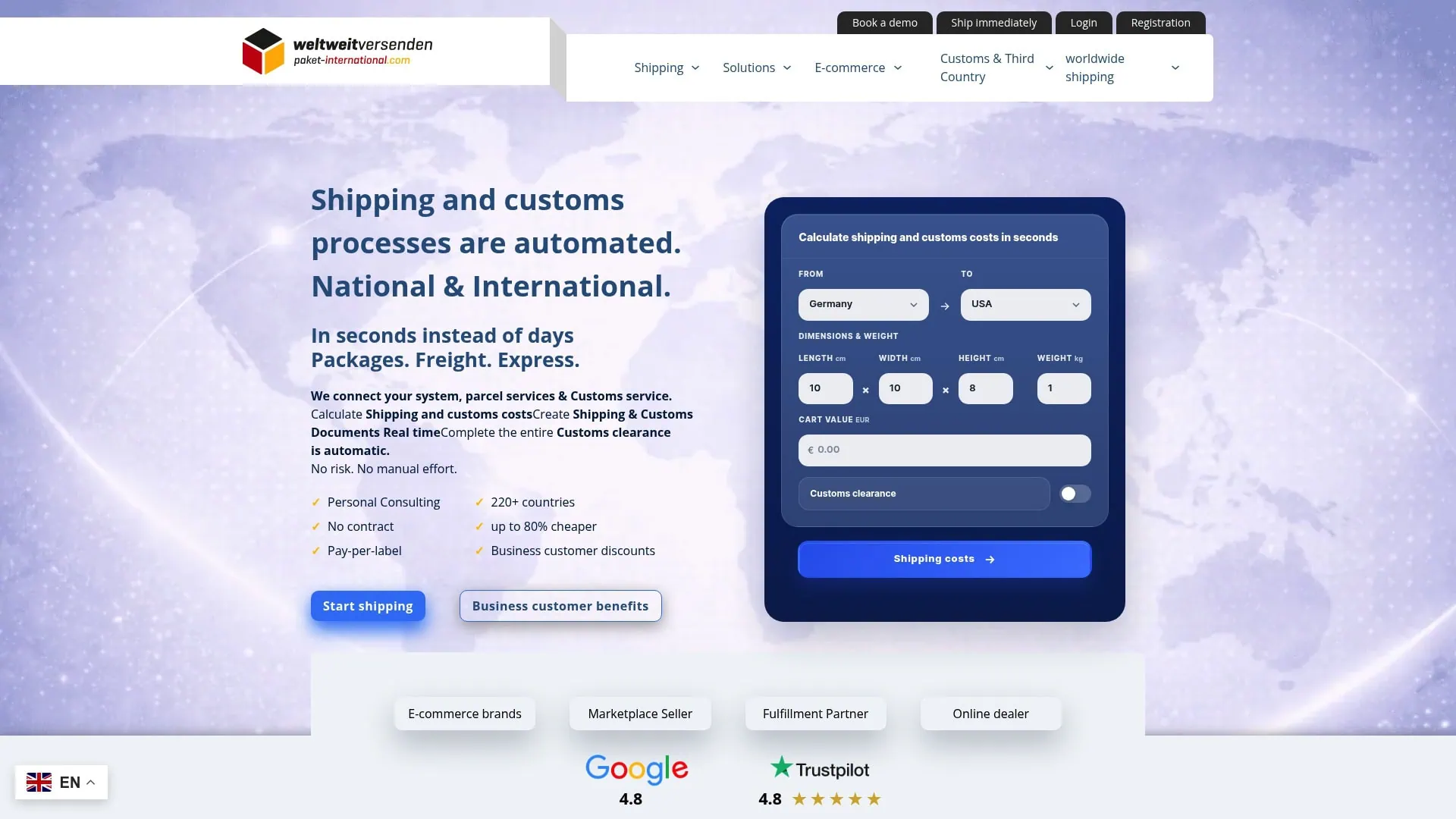
The platform automatically calculates shipping costs and customs duties and creates the necessary shipping documents without the need to manually enter product descriptions or customs tariff numbers.
- Automated calculation of shipping costs and customs fees before shipment.
- Central dashboard for managing multiple shipments and parcel services.
- Automated customs clearance without manual data entry.
Anyone wanting to compare shipments to Brazil via multiple parcel services will find information on the Customs clearance page of Paket International a direct way to book shipping and customs clearance together.
FAQ
What customs duties apply to goods from Brazil?
For shipments from abroad to Brazil, under "Remessa Conforme" an import duty rate of 0% applies up to a value of 50 US dollars, above that it is 60% with a deduction of 30 US dollars.
How much does it cost to ship a package to Brazil?
Shipping costs depend on weight, volume, and the chosen service level; fixed rates for Brazil cannot be given as a general figure. Providers like Paket International already offer international shipping. from € 15 The exact price for a shipment to Brazil is calculated by the platform.
Does Germany have a double taxation agreement with Brazil?
This question concerns income and corporate taxation, not import duties on parcel shipments. For private or commercial shipments of goods, only the Brazilian customs and ICMS regulations of the Receita Federal apply.
How do I know if I have to pay customs duties on a shipment?
The responsible courier service or Correios registers each shipment in the Siscomex Remessa system and automatically calculates the applicable duties based on the declared value of the goods. The recipient is informed via the respective delivery service's website and must make the payment within approximately 20 days; there is no separate request from the tax authorities.