
Dual-use testing: Obligations and procedures for companies
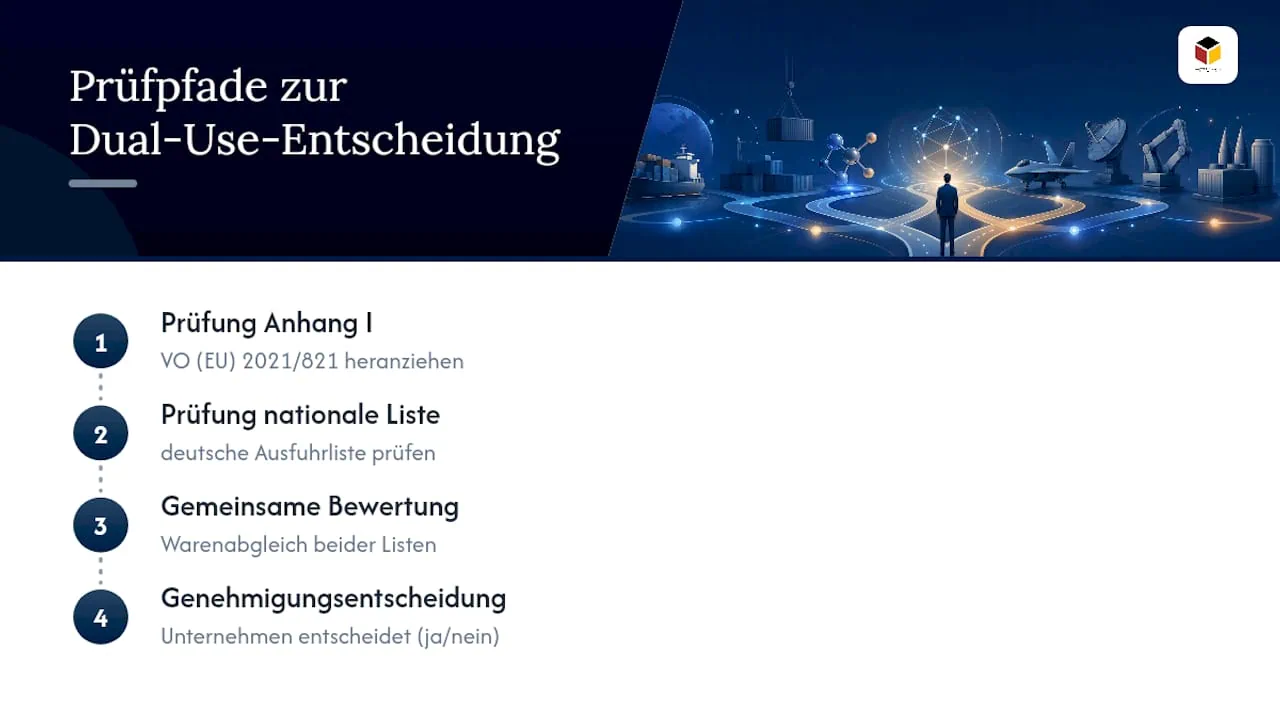
Companies are responsible for checking their goods for dual-use classification. If a product is listed in Annex I of the Regulation (EU) 2021/821 If the goods are listed on the national export control list, export is subject to licensing requirements. If you are unsure about the classification, you should request information or a negative ruling from the Federal Office for Economic Affairs and Export Control (BAFA). Thorough documentation of the review process will protect you from penalties if customs inquires later.
In short:
- If there is uncertainty about the classification of a product, an inquiry should be made to BAFA to avoid later sanctions.
- The assessment is based on a technical comparison with Annex I of the EU lists as well as the national export list and requires careful documentation.
- In principle, goods listed in Annex I or on the national list are subject to authorization, with technical parameters being decisive.
- Even goods that are not explicitly listed can become subject to licensing requirements under the catch-all rule, especially if there are indications of military end use.
- Regular training in the export control process and complete documentation of the audit process are essential to effectively minimize liability risks.
Table of Contents
- Legal framework and basic concepts of dual-use testing
- What is the step-by-step process for a dual-use review?
- When do catch-all regulations and end-use checks apply?
- What tools support the classification?
- How do you document the audit in a legally compliant manner?
- Important primary sources for classification
- Sources
- FAQ
Legal framework and basic concepts of dual-use testing
The central legal source for every dual-use review is the Regulation (EU) 2021/821It applies directly in all Member States and lists in Annex I all goods whose export from the EU requires a permit. The Annex is regularly updated, most recently by a Delegated Regulation which added new items.
In addition to Annex I, there is the national export control list. This list includes additional goods that are subject to control from a German perspective but are not on the EU list. Both lists must be consulted in parallel during the inspection, as a product may be missing from one and appear in the other.
The legal framework for customs control is enshrined in the Foreign Trade and Payments Act (AWG) and the Foreign Trade and Payments Ordinance (AWV). Anyone exporting goods without a permit risks administrative offenses. In cases of intent or gross negligence, criminal penalties may apply under the AWG and AWV. In all cases, the exporting company remains responsible, not the freight forwarder or customs service provider.
What is the step-by-step process for a dual-use review?
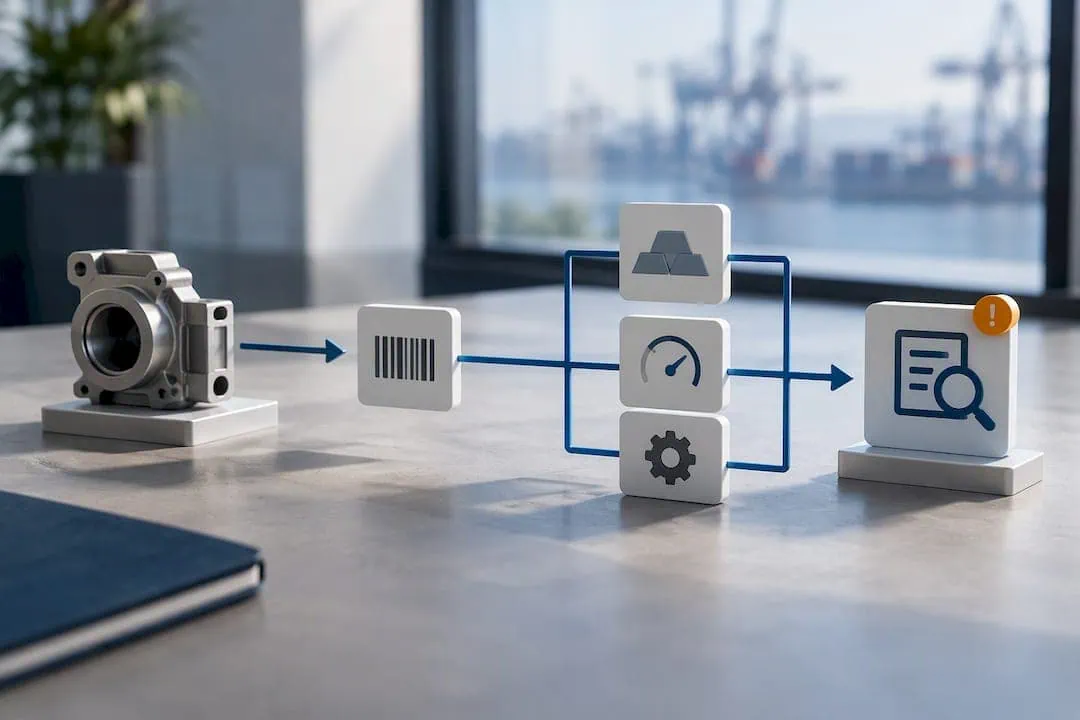
A proper classification always follows the same logic: first record technically, then compare with the wording of the lists, and finally document.
- Technical recordingCompile the data sheet, measurement data, photos, and, if necessary, a technical report. For complex products like machine tools, a module or component analysis is worthwhile, as used machines may need to be evaluated differently than new ones.
- Determine category and genusThe list position consists of a category (0 to 9, such as nuclear technology, materials, electronics) and a type (A to E, for example systems, technology or software).
- Check wordingThe product description is compared sentence by sentence with Annex I and the national export list. Technical thresholds, such as frequency ranges or material purity, often determine whether a license is required.
- Check end use and recipientWho buys the goods, what are they used for, and which country are they going to? Any irregularities here trigger a separate investigation, regardless of whether the goods are listed.
- If in doubt, consult BAFA.: A statement of information or a negative decision provides clarity when the classification is not clear.
- Create test reportDocument the result, sources, and responsible person in writing.
Purely relying on catalog experience is rarely enough. Experts advise careful consideration. Analysis of technical parameters instead of a rough assessment by product category.
Pro tip: Never check the customs tariff number alone. Two products with the same number can have completely different technical parameters, and only the parameters determine the listing.
When do catch-all regulations and end-use checks apply?
Even goods not listed can require authorization. This so-called catch-all provision under Articles 4 and 5 of the Dual-Use Regulation applies if there is concrete evidence of a military end use or human rights risks. Member States examine such evidence within a reasonable timeframe. This means that companies without classic dual-use products are not automatically exempt.
Certain anomalies, so-called red flags, should halt any export until clarity is established:
- The customer is ordering significantly more than their usual needs would explain.
- The delivery address is located in a region with known procurement networks or embargoes.
- The recipient is reluctant to answer questions about the end use or demands unusual payment methods.
- A sales representative with no discernible technical background is selling a highly specialized product.
This End-use checks These steps should be done in writing: a brief inquiry to the customer, an end-use declaration, or at least a note for plausibility checks. Documenting these steps allows you to later prove that you have fulfilled your duty of care.
What tools support the classification?
Several tools facilitate the preliminary review, but do not replace a technical case-by-case review.
- The Conversion directory It assigns customs tariff numbers to possible list items. It provides an initial indication, but is not legally binding and can provide a false sense of security if one relies solely on it.
- EZT-online It provides the appropriate customs tariff number and sometimes gives indications of possible list items, but it does not replace a content review.
- Primary sources such as EUR-Lex for the regulation text, the Federal Ministry for Economic Affairs and Energy, as well as customs and BAFA remain the relevant points of contact for legal questions.
- Commercial testing tools and compliance software can structure internal audits and monitor deadlines. However, they do not provide a legally binding classification and do not replace a technical analysis of the product.
How do you document the audit in a legally compliant manner?
A test report should contain at least the following elements: the product's technical data, a comparison table with the wording of the tested list item, the sources used, and the name and signature of the responsible person. Without this traceability, it is difficult to prove later that the test was carried out thoroughly.
The documents should be kept for several years so that they are readily available during a customs audit. The combination of technical analysis, end-use check, and documented test track It is considered the best protection against liability risks.
- Create a test report for each product or product family, not just upon the first request.
- Establish review intervals, as Annex I and the national export control list change regularly.
- Define the escalation process: Who decides in the event of red flags, and who requests a negative decision if necessary?
- Schedule training for sales and export staff, as red flags are often first noticed in customer contact.
Pro tip: A zero assessment takes time to apply for, but significantly less than a subsequent fine proceeding. Companies that regularly export similar goods should plan for a zero assessment as an integral part of their product launch process.
Those who understand the inspection as an integral part of the export process should consider it alongside the other processes. Export control during the shipping process Interlock the processes so that the classification is not done only shortly before shipping.
Important primary sources for classification
For daily practice, a small circle of key sources suffices: the regulation text on EUR-Lex, the overview from the Federal Ministry for Economic Affairs and Climate Action, information from customs, and case-by-case information from the Federal Office for Economic Affairs and Export Control (BAFA). Third-party providers, conversion directories, and commercial tools can supplement this, but in cases of doubt, only the official rulings of the authority or the legal text are authoritative. Anyone unsure should contact the source directly rather than relying on a summary.
This article provides general information and does not replace advice from a qualified lawyer. Consult a qualified legal professional regarding your personal situation before acting on the basis of this content.
Sources
- Dual-use goods — Federal Ministry for Economic Affairs and Climate Protection
- Regulation (EU) 2021/821 — EUR‑Lex (full text)
- The conversion directory — Stuttgart Chamber of Industry and Commerce
FAQ
How do I check dual-use goods?
First, the product is technically recorded and assigned to a category (0 to 9) and a type (A to E). This is then checked against Annex I of the Dual-Use Regulation and the national export list. If there is any uncertainty, a ruling from the Federal Office for Economic Affairs and Export Control (BAFA) or a negative assessment notice can be obtained.
Which goods fall under dual-use categories?
Dual-use goods are products, software, and technologies that can be used for both civilian and military purposes, such as certain machine tools, electronics, or surveillance technology. Even unlisted goods can fall under the catch-all regulation if there is evidence of a military end use.
What is the EU's Dual-Use Regulation?
Regulation (EU) 2021/821 is the central legal basis for the control of dual-use goods throughout the EU. Annex I lists all goods requiring authorization and also regulates catch-all cases for goods not listed.
What are dual-use technologies?
Dual-use technologies are technical processes or software that can serve both civilian and military purposes, such as certain encryption software or surveillance technology. Since 2021, the EU has significantly tightened the control of such surveillance technology through the Dual-Use Regulation.