Import VAT reform: Countries want a clearing model – logistics industry demands faster pace
The Conference of Finance Ministers has given the green light to a new accounting model for import VAT. This is intended to eliminate the previously costly pre-financing for importing companies. While policymakers are aiming for a 2030 launch, logistics associations are urging faster implementation to prevent competitive disadvantages for German ports and logistics centers.
Good news for importers and the logistics sector: The finance ministers of the German federal states have voted in favor of introducing a long-demanded offsetting model for import VAT. The concept originates from a joint federal-state working group and was noted with approval by the Conference of Finance Ministers.
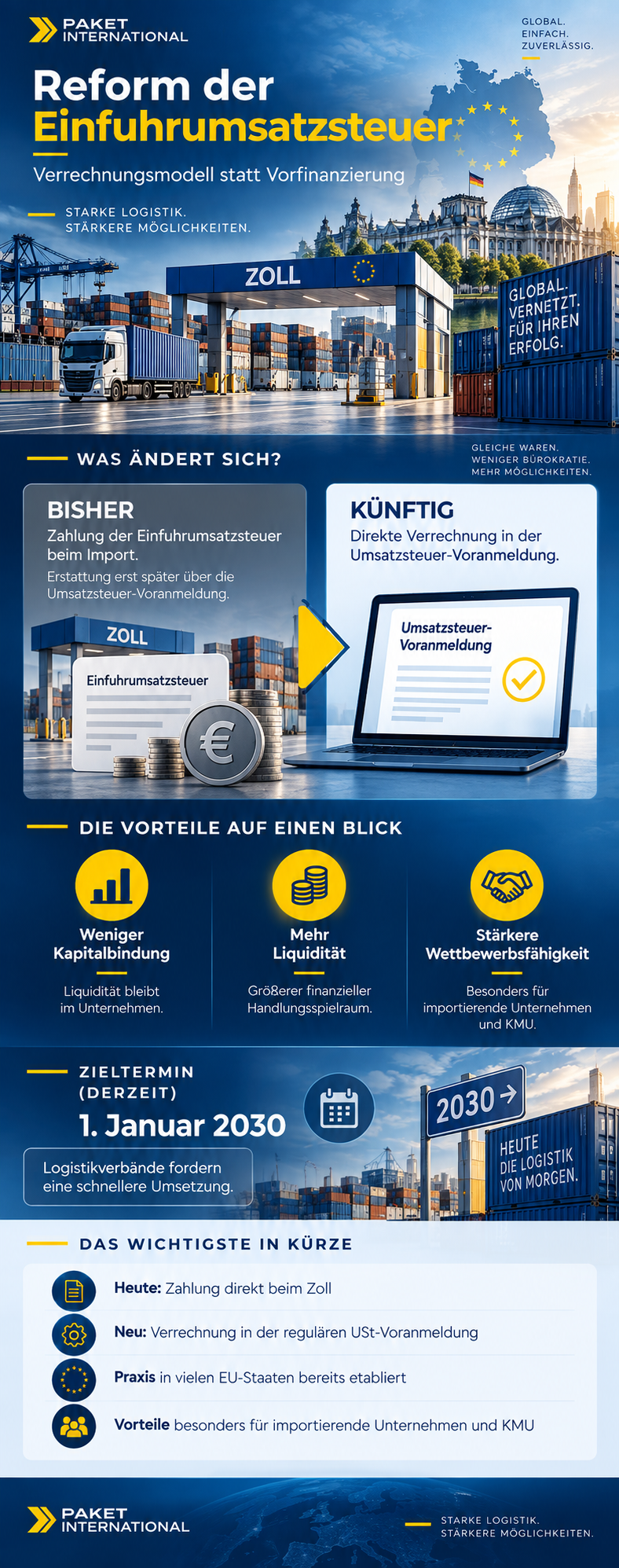
What changes with the new model?
Currently, companies must pay import VAT directly at customs upon import of goods and can only reclaim this amount as input tax from the tax office later in their VAT return. This leads to significant liquidity and interest burdens.
The revised accounting model is intended to eliminate this liquidity disadvantage:
-
Direct billing: Companies will in future report import VAT in their regular VAT return and claim it as input tax at the same time.
-
Liquidity neutrality: The previous capital requirement for customs clearance is eliminated.
-
European standard: The procedure is already common practice in many other EU countries and is particularly SME-friendly.
Focus on competitive advantage for Germany as a business location
Political proponents emphasize the growing importance of German import ports. North Rhine-Westphalia's Finance Minister, Dr. Marcus Optendrenk, underlined that goods imports via German ports must not suffer any competitive disadvantages – a key concern with regard to the major port of Duisburg and other logistics hubs in the state. Up to now, companies have sometimes resorted to other European import and logistics locations due to administrative hurdles and liquidity constraints.
Logistics associations are demanding significantly faster speed
The target date for the introduction of the model is currently set for [date]. 1 January 2030 This timeline is being targeted. However, this schedule is facing criticism from the business community.
Associations such as the German Freight Forwarding and Logistics Association (DSLV) and the German Transport Forum (DVF) expressly welcome the political breakthrough as an important step towards reducing bureaucracy, but are calling on the federal government to drastically shorten the transition period. Given the current challenges to Germany's competitiveness, they argue that waiting until 2030 is not an option.
Next Steps
The federal government is now called upon to initiate the necessary legislative changes. At the same time, the federal and state governments must work closely together to adapt the technical requirements and interfaces in the tax administration's IT systems in a timely manner.