
Handling international returns in compliance with customs regulations
Whenever an international return is pending, the following applies: Clearly mark the shipment as "returned goods," include a pro forma or commercial invoice with an EORI number and return label, and electronically register the return with customs. Those who skip this step risk paying double import duties.
An overview of the immediately necessary measures:
- Shipment identification: Clearly mark "Returned Goods" on the outside of the package and in all accompanying documents, including EU code F01 in ATLAS, so that customs does not impose a new import duty.
- Select invoice type: A commercial invoice is required for returns of commercial origin, and a pro forma invoice for returns of non-commercial origin. Both must include the reason for the return, the original value, and the EORI number.
- CN22/CN23: For shipments over 300 SDR (Special Drawing Rights), CN23 is mandatory; CN22 applies to lighter, smaller packages.
- EORI number: It must be on all documents. Without it, customs will block the shipment.
- MRN/Export proof: If an export certificate (Movement Reference Number) is available, always include it.
- Electronic pre-registration: Submit an EAD (Export Accompanying Document) or comparable electronic customs declaration before shipment.
Pro tip: Create a single standard returns checklist as a template and store it in your system. This way, all employees provide the same documents for every non-EU return without having to think about it anew each time.
Key insights
Correct labeling as returned goods, complete documentation on the first attempt, and automated processes are the three most effective levers to avoid customs charges for international returns.
| Theme | Details |
|---|---|
| Immediate action: Labeling | Mark each shipment as "returned goods" on the outside and in all documents, and add EU code F01 to ATLAS. |
| Required documents | Please include a pro forma or commercial invoice, CN22/CN23, EORI number and MRN with every non-EU return. |
| Standardizing special cases | Store your own document templates in the system for returns from China, bulky goods and repair cases. |
| Contesting customs demands | Have export documentation (MRN), RMA and proof of arrival ready; file an objection within one month. |
| International Package | Automated document generation, EORI validation and multi-carrier selection in one platform for fewer reclaims. |
Table of Contents
- Why international returns are relevant under customs law
- What documents are needed for international returns?
- Standard procedure for internal returns handling
- How automation reduces errors and additional claims
- Special cases: Returns from China, bulky goods and repair shipments
- What factors influence costs and processing times?
- Return instructions for customers
- If customs demands additional payment: Steps for a refund
- International parcel for automated returns and customs procedures
- Sources
Why international returns are relevant under customs law
A return shipment is not simply a matter of sending a package back to the sender. From a customs perspective, it is a separate import and export transaction that must be fully documented.
If documents are missing, customs treats the goods as a new import and levies duties again. Specifically, this means:
- Additional claims: Customs authorities can demand import VAT and customs duties a second time if the returned goods status is not proven.
- Delays: Incomplete CN forms or missing EORI numbers lead to customs stops that can last for weeks.
- Storage costs: Shipments stuck in customs warehouses incur daily fees.
- Customer credits: As long as the goods have not been released, no refund can be issued to the customer, which will result in complaints and negative reviews.
- Margin losses: Any additional claim that is not reimbursed directly reduces the margin.
Pro tip: Set up a digital document repository where each return is linked to proof of export, MRN, and RMA number. This significantly speeds up the refund process and prevents missing documents during customs inquiries.
What documents are needed for international returns?
Document requirements depend on the destination country, the value of the goods, and the reason for the return. These documents are mandatory in most cases:
- Pro forma or Commercial invoice with customs details
- CN22 (up to approx. 300 SDR) or CN23 (above)
- Sender's EORI number
- MRN / Export certificate (if available)
- Packing list with weight, dimensions and contents
- In case of repairs: Repair order with RA number
- In case of warranty claims: Proof of purchase and warranty document
Required fields per document
| Documents | mandatory fields |
|---|---|
| Commercial invoice | Sender/recipient, EORI, goods description, HS code, original value, reason for return, "returned goods" marking |
| Proforma invoice | The same fields as a commercial invoice; additionally: "no commercial value" if applicable. |
| CN23 | Sender, recipient, description of contents, weight, customs value, HS code, category "returned goods" |
| Packing List | Item name, quantity, unit weight, total weight, dimensions |
| Repair receipt | RA number, fault description, serial number, repair value |
Invoices must be Original value of the goods Do not declare the current market value or zero. A common mistake is stating "€0" as the value to avoid taxes. This is considered false declaration and can lead to confiscation. Automated management of export documents This helps to correctly fill in these fields within the system.
Pro tip: In case of repairs, always include the RA number on the outer carton and in all accompanying documents. This allows customs officials to immediately recognize the repair nature of the item and expedite the release process.
Standard procedure for internal returns handling
A structured process prevents steps from being forgotten and responsibilities from remaining unclear.
- Accept return request (Customer service): Check reason, item number, and original invoice.
- Issue Return Merchandise Authorization (RMA): Assign a unique RMA number and communicate it to the customer.
- Send customer instructions: Submit packaging instructions, document requirements and address (template see section 8).
- Check incoming goods (Warehouse): Check goods for completeness and condition, verify RMA number.
- Create documents (Customs/Compliance): Proforma or commercial invoice, CN22/CN23, packing list, repair receipt if applicable.
- Shipping preparation (Storage): Attach marking to the outside, select carrier, create label.
- Submit an electronic customs declaration: EAD or similar document before handover to the carrier.
- Reception and booking (Accounting): Book goods receipt, issue customer credit note, close file.
Regarding Incoterms: Who bears the freight costs and duties in the event of a return depends on the original agreement. With DDP (Delivered Duty Paid), the seller also bears the return shipping costs. With DAP (Delivered At Place), the responsibility lies with the customer. Check the agreement before every return.
The international returns management Paket International digitally maps this process and links all steps in a central dashboard.

How automation reduces errors and additional claims
Manual processes are prone to errors. A single incorrectly entered HS code or a missing EORI number is enough to delay a shipment for days.
Automated platforms check these fields before shipping and generate documents directly from the order data. The essential functions that a platform for international returns must offer are:
- EORI validation before document creation
- Automatic document generation (Proforma, commercial invoice, CN22/CN23)
- Multi-carrier integration (DHL, UPS, FedEx, DPD, DB Schenker) for price comparison and label issuance
- Electronic Advance Registration (EAD) directly from the system
- MRN Import and linking to the shipment file
- API/Plugin Integration to shop and ERP systems
- Dashboard transparency for all active returns in real time
Potential savings: Paket International states that retailers can significantly reduce process costs through fully automated customs and shipping cost calculation.
The International shipping with automatic customs clearance The International package includes these functions and reduces manual intervention to a minimum. Also, the Import duties at checkout This allows for transparent cost calculations before the customer even places an order.
Special cases: Returns from China, bulky goods and repair shipments
Returns from China
Returns from China take longer and are subject to stricter export controls on the Chinese side. Typical challenges include:
- Chinese export authorities require their own export documents, which are not identical to European MRN documents.
- Customs inspections in China can cause longer delays.
- Serial numbers and original packaging must be retained, otherwise customs authorities will refuse return.
- Incorrectly declared goods lead to confiscations on the Chinese side.
bulky goods and general cargo
Bulky returns require special packaging, freight classification, and often special permits. International heavy transport These shipments require additional customs documents, such as waybills (CMR, AWB) and specific customs tariff numbers. Oversized goods surcharges can significantly increase return shipping costs. All relevant information on shipping options and costs can be found on the [website/page name]. Bulky goods overview page.
Repair and warranty cases
Shipments for repair must be declared as "temporary export for repair." The customs value corresponds to the repair cost, not the value of the goods. Document the repair order with the RA number, a description of the fault, and the serial number. For transport insurance purposes, the replacement value must be stated.
Pro tip: Define fixed return types in the system (e.g., "Warranty," "Repair," "Exchange," "China Return") and assign a document template to each type. This saves time with every return and prevents errors.
What factors influence costs and processing times?
The total cost of an international return consists of several items:
- Transport mode: Air freight is faster (3-7 days) but more expensive; sea freight takes 3-6 weeks and is suitable for heavy shipments.
- Weight and volume: Bulky goods surcharges can double the base price.
- Missing documents: Each additional demand from customs extends the processing time and generates storage costs.
- HS codes: An incorrect customs tariff code can lead to an incorrect calculation of duties, which must be corrected subsequently.
- Inco terms: Whoever bears the duties and freight costs determines the actual cost burden for the retailer.
- Import and export restrictions: Certain goods (batteries, chemicals, food) are subject to additional requirements, which cause delays.
Cost-saving measures include correct documentation on the first attempt, preliminary clarification with the responsible customs office in unclear cases, and combining multiple returns into one shipment. Customs clearance in comparison shows how carriers and conditions differ.
Paket International states that retailers can significantly reduce process costs through automated processes.
Return instructions for customers
Send your customer these instructions with the RMA confirmation:
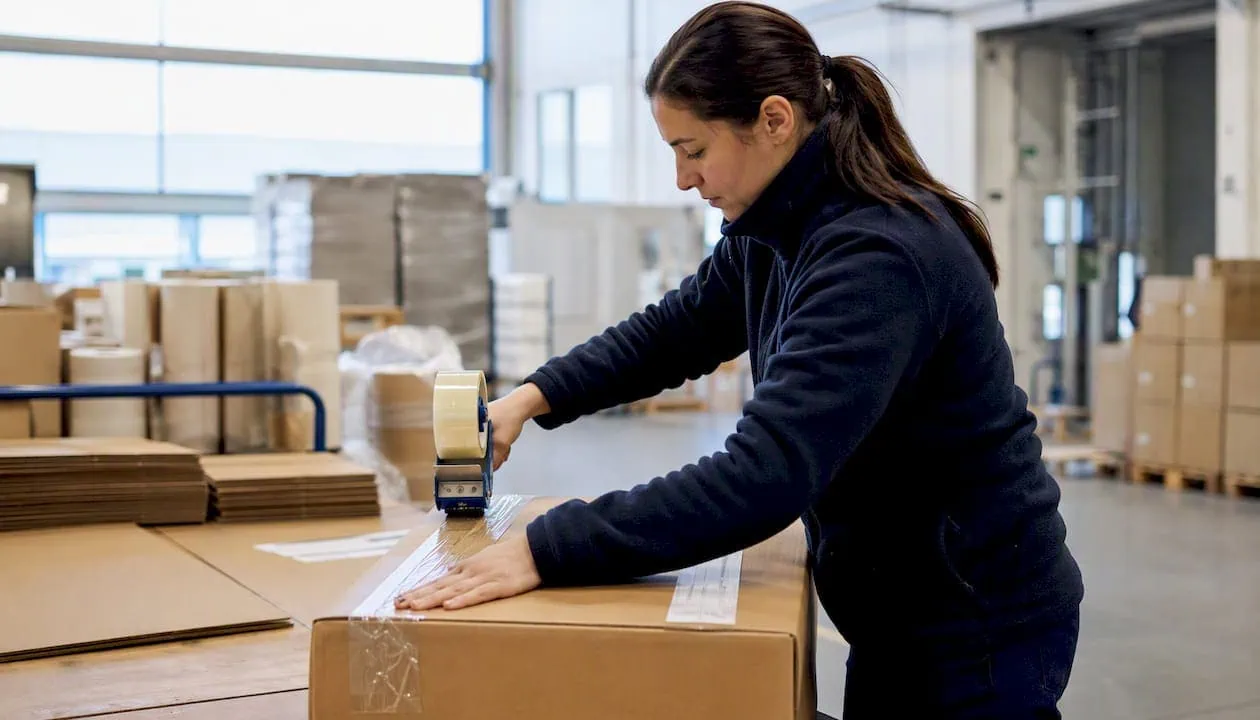
Please clearly mark the outside of the package with "Returned Goods" and your RMA number [NUMBER]. Place the enclosed pro forma invoice and the original proof of purchase inside the package. Pack the goods securely in the original box or equivalent material. For repair shipments, please include a brief description of the fault along with the serial number.
Mandatory information for customers:
- RMA number on outer carton and in all documents
- Proforma invoice or copy of the original invoice
- "Returned goods" marking on the package
- Brief description of the reason for the return
- For electronics: serial number and original accessories
If customs demands additional payment: Steps for a refund
Customs duties can be contested if the correct documentation is available. Procedure:
- Compile the documents: Export certificate (MRN), shipping label, RMA document, commercial or pro forma invoice, packing list, if applicable, confirmation of arrival.
- Note the deadline: Objections must be submitted within the statutory period (in Germany, usually one month after the notification).
- Contact the customs office: Please contact the responsible customs office in writing, including the shipment number, MRN and RMA reference.
- Submit a claim for reimbursement: Submit the form “Application for remission or refund of import duties” (Article 116 of the Union Customs Code).
- Tracking: Document the submission in the system, monitor deadlines, and await feedback from customs.
The Confirmation of arrival This is often the crucial proof that the goods were actually exported.
Pro tip: Maintain a digital file with versioning for each return. Unique reference numbers (RMA + MRN) as file names significantly speed up searches for customs inquiries.
International parcel for automated returns and customs procedures
Manually handling international returns is a double cost: once in time, and once in errors. Paket International automates the entire process, from document generation to electronic customs declaration, and connects all major carriers (DHL, UPS, FedEx, DPD, DB Schenker) on a single platform.
Specifically, this means: Pro forma invoices, CN22/CN23 forms, and shipping labels are generated directly from the order data, EORI numbers are automatically validated, and the central dashboard displays the status of each shipment in real time. API integration with existing shop and ERP systems eliminates the need for manual data entry. Separate shipping options are available for bulky goods and special cases.
Merchants who want to automate their customs clearance can get started directly on the platform. For Online retailers with regular international shipping The International package offers individual price lists and premium rates with calculated landed costs.
Sources
For operational implementation and technical integration:
- Logistical challenges in international heavy transport – LC Innovative Logistics GmbH