

Improving delivery rates: three levers for international B2B shipping
The fastest way to increase delivery rates is through three key levers: accurate address data, complete customs information before shipment, and a carrier mix with precise, locally tailored delivery times. Automated platforms like Paket International reduce paperwork in customs processing, thus lowering the error rate at the source. To measure the impact, companies primarily monitor the first-time delivery rate, the return rate, and the volume of WISMO inquiries.
In short:
- Only an address validation below 95% indicates systemic errors in the checkout process, which can easily be identified through random sampling.
- Delays in cross-border shipments often occur due to faulty customs data, which can lead to waiting times of up to five days.
- Insufficient carrier coverage in target regions significantly increases the likelihood of unsuccessful delivery attempts.
- Automated checkout processes, such as clear shipping stages and automatic notifications, can significantly reduce the delivery time and expectation gap.
- Monitoring key performance indicators such as first-time delivery rate, return rate and WISMO tickets enables early problem detection and targeted countermeasures.
Table of Contents
- Audit checklist: Where delivery errors begin
- Operational and technical measures against delivery errors
- How do checkout and communication control delivery driver expectations?
- Which KPIs show whether your delivery rate is actually improving?
- International Parcel as a solution for international delivery problems
- Sources
Audit checklist: Where delivery errors begin
Before purchasing new tools, you need clarity on where the delivery processes are actually breaking down. A one-hour audit is usually sufficient to identify the biggest weaknesses, as the root causes are recurring in most companies.
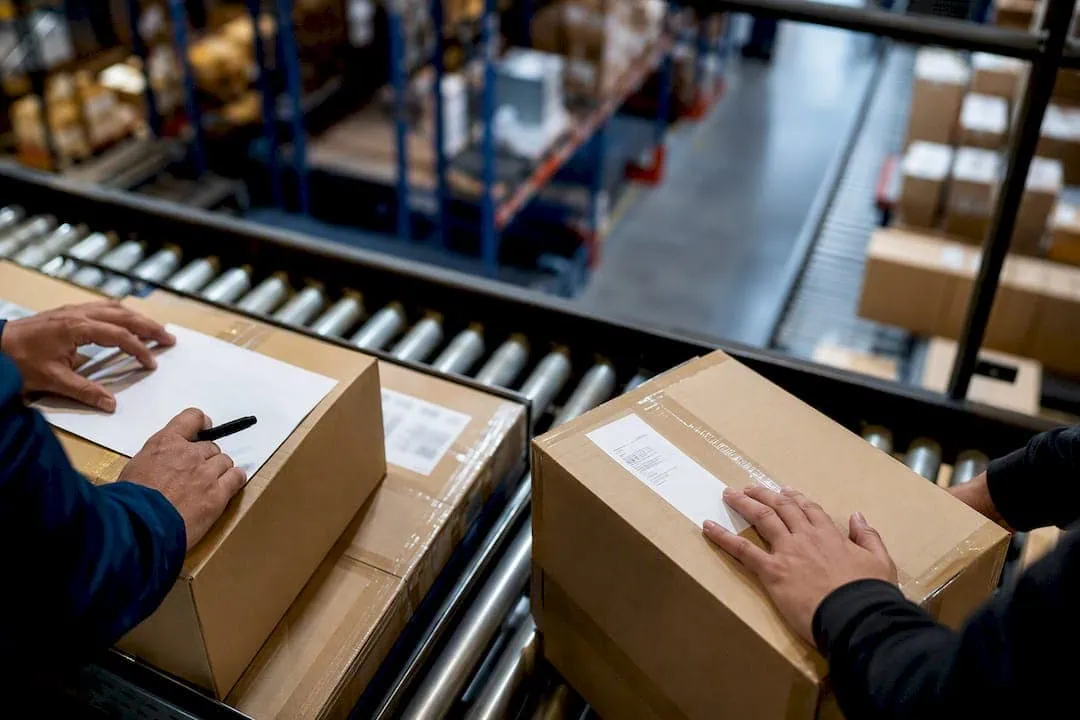
Many cross-border delivery errors are not caused by random carrier failures, but by systemic configuration errors in contracts, address logic, and routing. This means that correcting the configuration once prevents recurring problems instead of having to fight them anew with each shipment.
Systematically examine these five areas:
- Address data quality: Take a sample of 200 to 300 orders and check how many addresses fail validation. A validation rate below 95% indicates structural problems in the checkout process.
- Customs data integrity: Check HS codes, product descriptions, and invoice values for consistency. Incomplete or incorrect customs data often causes problems with cross-border shipments. two to five days delay through additional customs checks.
- Carrier coverage: Check which destination regions your current carrier doesn't have its own last-mile delivery service and relies on subcontractors for instead. This is precisely where most delivery attempts fail.
- Checkout promise vs. actual transit time: Compare the delivery time displayed at checkout with the actual end-to-end duration, including customs and local handling. This gap is often larger than teams assume.
- Inbound risks with FBA and 3PL: Check label formats, pallet dimensions, and docking windows. Rejected inbound shipments to German fulfillment centers trigger a Cost cascade from depot storage and re-preparation a costly one, which will be more expensive than any preventive check.
Those who document these five points have usually already identified half of their delivery problems without having invested a single euro in new software.
Operational and technical measures against delivery errors
The audit is followed by implementation. The most effective changes concern the checkout process, routing, and packaging, and can usually be implemented within a few weeks.
- Integrate address autocomplete into the checkout process. Live validation during input prevents the most common typos before the order is even completed.
- Validate existing address databases in bulk. Customer data from the last twelve months can be compared against validation services to identify recurring delivery problems with regular customers.
- Use geocoding and visual context data. Precise coordinates instead of simple text addresses significantly improve the routing of delivery drivers, because Address validation and accurate geocoding These are among the most effective levers for first-time delivery rates.
- Standardize labels and barcodes. Inconsistent formats regularly lead to the rejection of entire pallets at fulfillment centers.
- Introduce multi-carrier routing with fallback rules. Zone-based routing across multiple carriers reduces dependence on a single provider with weak regional coverage.
- Define packaging specifications for each product group. Clear standards for padding and cardboard thickness reduce damage rates and therefore also the return rate.
Pro tip: Test your geocoding accuracy at ten random addresses using a map service before rolling out a new routing rule for an entire country. A single incorrect reference point is enough to send hundreds of shipments to the wrong zone.
For integrations that technically map these steps, it is worth taking a look at Technical solutions for your e-commerce system, providing API and plugin connections for address and customs data verification.
How do checkout and communication control delivery driver expectations?
A large proportion of delivery problems don't arise during delivery itself, but rather at checkout when expectations are misplaced. A speed-vs-price model with three clear shipping tiers, such as Economy, Standard, and Express, gives customers control over their own expectations and simultaneously reduces the number of support requests, as with... Safe planning and execution of heavy transport – LC Innovative Logistics GmbH described.
- Display carrier-specific ETAs instead of general timeframes like "3 to 5 working days". This inaccuracy is one of the main reasons why... real transit times They may be displayed incorrectly in the checkout process.
- Actively inquire about delivery preferences: drop-off location, delivery to a neighbor, time window, or collection from a parcel shop.
- Send automated exception notifications via SMS or email as soon as a shipment is delayed, including a clear next step for the recipient.
- Show import duties at checkout, because since the abolition of the 150-euro duty-free allowance in the EU, the profitability of DDP shipping has changed noticeably, and unclear fees often lead to customs stops.
More on how Calculate import duties at checkout This feature displays a transparent cost overview, informing customers of the actual final price before purchase. Those wishing to offer multiple shipping levels will find practical approaches in the article on... Express Shipping.
Which KPIs show whether your delivery rate is actually improving?
Without data, every measure remains a guess. Four key figures provide a reliable picture:
- First-delivery rate: Percentage of shipments that arrive successfully on the first delivery attempt. Values below 92% should trigger an alert.
- RTO and return rate: Percentage of shipments returned to the sender. An increase above the usual fluctuations generally indicates an address or customs problem.
- WISMO tickets: The number of "Where is my order" requests per 100 orders. Proactive exception notifications reduce this volume by [amount missing], according to industry observations. approximately 30%.
- Transit Delta: The difference between promised and actual delivery time per carrier and destination country.
Connect these metrics via carrier APIs, your shop system, and a central tracking feed, instead of manually compiling them from individual reports. Set up automated alert rules: If the first-time delivery rate in a zone falls below the threshold, trigger an address validation rollout or a carrier fallback, rather than only being noticed at the end of the month. A weekly report with clear responsibilities for each target market keeps track of the metrics before they become a problem.
International Parcel as a solution for international delivery problems
For those who don't want to manage these levers manually, Paket International offers a platform that automatically addresses precisely these weaknesses. Instead of managing customs data, shipping costs, and tracking information across multiple systems, the platform consolidates them in one place.
Automated customs clearance checks invoice data and HS codes before a shipment even leaves the warehouse, thus reducing precisely those customs errors that cause international delays. API and plugin integrations allow the platform to be connected to existing shop and ERP systems, eliminating the need to maintain duplicate address and customs data. The central dashboard displays all shipments across various parcel services such as DHL, UPS, FedEx, DPD, and DB Schenker, reducing the volume of WISMO inquiries because customers and support can view the current status at any time.
For retailers with high international shipping volumes who are looking for automation instead of manual customs forms, it's worth taking a look at the International shipping with professional customs clearanceThere, you can directly check which shipping partners and customs options are available for your target markets, including a non-binding calculation of the actual total costs.
Sources
- 6 Service Level Risks in Cross-Border Order Delivery – FLEX.
- Rejected inbound delivery Amazon.de – FLEX. Logistics
- How to Build a Last‑Mile Delivery Strategy That Wins in 2026 – Online Store News
- Ways To Increase Last Mile Delivery Success Rate – Maponomy